


Amblyopia

Amblyopia
Amblyopia

Amblyopia

Amblyopia

Amblyopia (lazy eye) is the loss or lack of development of vision in an eye that is unrelated to any eye health problem or disease. It develops between birth and 8 years of age. Because of improper stimlation, the brain does not learn how to process a 20/20 image. The reduced vision due to amblyopia is not correctable with lenses alone, so unless the person undergoes vision therapy (eye exercises) , they will go through life using only one eye. It can only be diagnosed through an eye examination.
Causes of amblyopia
Amblyopia is generally the result of poor early visual development up to ther age of eight.
Premature infants and those with low birth weight are at a greater risk for the development of the condition at a very early age.
Farsighted or those with a large different prescriptions in each eye. If there is a large enough difference in the degree of nearsightedness, farsightedness, or astigmatism between the two eyes, or if the eyes are crossed, the brain learns to ignore one image in favor of the other causing poor development in the other eye. This is no different from having your right arm in a cast. The left arm would get stronger while the right arm would become weaker.
Congenital Cataracts or obstruction at birth
It is estimated that two to four percent of children have amblyopia. The chance of amblyopia developing during adulthood is very small.
Vision with Amblyopia
Normally, the images sent by each eye to the brain are identical. When they differ too much, the brain learns to ignore the poor or blurred image sent by one eye and “sees” only with the good eye.
The vision of the eye that is ignored becomes weaker from disuse. The brain doesn't know how to process the image. Glasses or contacts cannot make it any clearer. Vision in the amblyopic eye may continue to decrease if left untreated. The brain simply pays less and less attention to the images sent by the amblyopic eye. Eventually, the condition stabilizes, and the eye becomes virtually unused. It is quite difficult to treat at this point.
The amblyopic eye is never blind in the sense of being entirely without sight, but depth perception is reduced. Amblyopia affects only the central vision of the affected eye. Peripheral awareness will remain the same. However, if the amblyopia is severe and the person lost sight in the good eye, they may be visually impaired and not be able to perform normal activities, like driving a car.
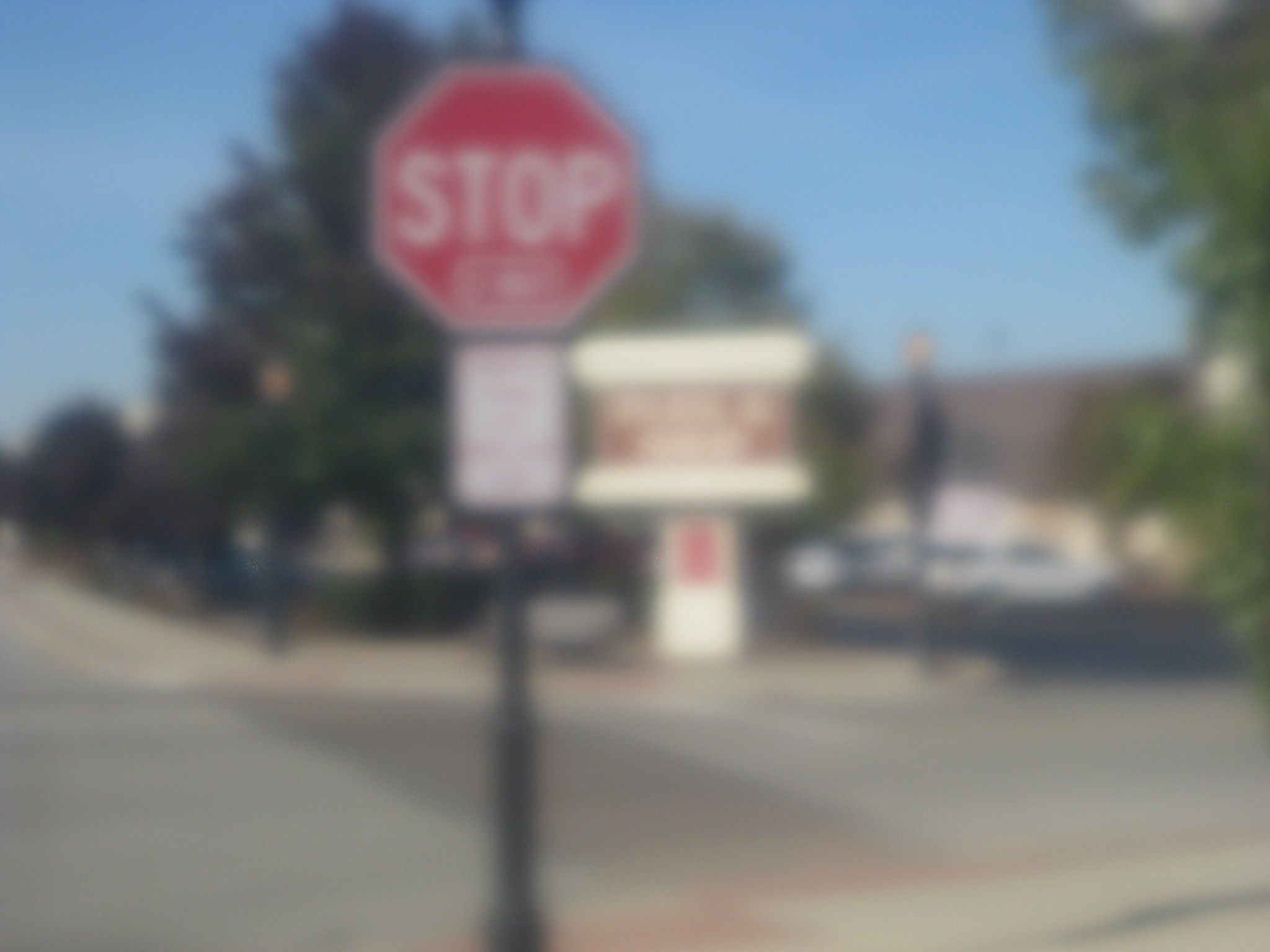
Best vision possible from Amblyopic eye.
Amblyopia Symptoms
Few symptoms. It may be accompanied by crossed eyes or by a large prescription.
Head turning in favor of the good eye
Since amblyopia occurs only in one eye, the good eye takes over; and the child and parent are generally unaware of the condition. Therefore, it is important to have your child's vision examined between 18-24 mo of age and again before he or she enters school.
Amblyopia Treatment
Only a comprehensive eye/health examination can diagnose the presence of amblyopia.
The earlier it is diagnosed, the greater the chance for successful treatment.
To enhance early detection, the State of Illinois, effective January 2008, passed a law requiring all children entering kindergarten have a thorough eye examination from an eye doctor
Corrective glasses, prisms or contacts are the first line of amblyopia treatment.
Patching (occluding) the good eye is needed sometimes to force the amblyopic eye to work
Other more advanced Visual Therapy may be prescribed
Early detection and treatment can prevent amblyopia


© 2024 Skowron Eye Care. All rights Reserved. Accessibility Statement - Privacy Policy - Sitemap
Powered by:
