


Lenses For Every Lifestyle

Lenses For Every Lifestyle
Lenses For Every Lifestyle

Lenses For Every Lifestyle

Lenses For Every Lifestyle
We Offer a 100% Satisfaction Guarantee on Your Eyewear
Over 1500 Frames in Stock to Choose From
We carry a wide array of frames in style to meet every need and budget. We have complete lens and frame programs for the budget minded and offer the latest in designer brands. Our experienced frame stylists will make sure you get the look you desire, from traditional to contemporary to just plain fun. We will gladly custom order a frame, or give us your frame and we will make your lenses using the highest quality. Either way, you have our 100% satisfaction guarantee.
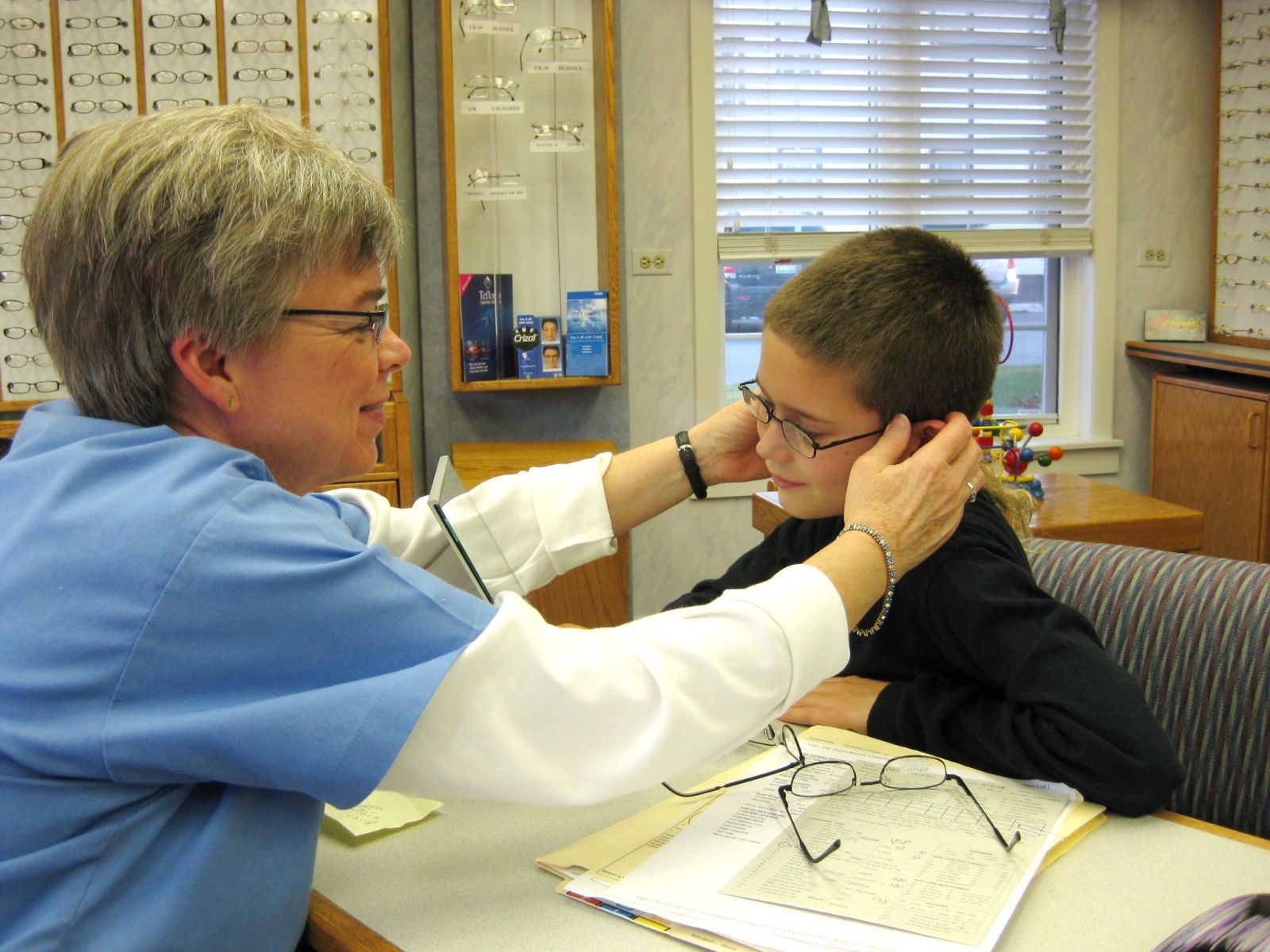
Designing attractive eyeglasses takes many factors into consideration. Our experienced staff has 125 years in the optical field and know what questions to ask to determine your specific desires. They know what shapes will look the best on your face. They will help you determine what frame shape and size will best fit your prescription to give you the lighted, thinnest, most attractive pair of glasses ever. For success and satisfaction, proper measurement and selection of eyewear are as critical as the correct prescription, determined by the doctor. Skowron Eye Care offers all this at prices below that of the major chains.
LENS MATERIALS:
Plastic lenses:
These lenses are the lightest, thinnest, and most attractive. The weight is half that of glass, but they scratch a bit more easily. The scratch-resistant coating protects plastic lenses during everyday use. Plastic lenses are prescribed about 95% of the time.
High-index Lenses:
You may have seen these advertised as "Featherweight". This extra thin and light material is used for higher prescriptions and rimless frames. Our frame stylists will help you choose the right frame to ensure that the "coke bottle" look is a thing of the past. We will design a set of eyewear for you that will look fabulous. We guarantee it.
Polycarbonate or Trivex Lenses:
This type of plastic is UNBREAKABLE. For safety reasons, we prescribe them for children and for sports goggles.
Glass lenses:
Glass offers scratch resistance but is twice the weight of plastic. If dropped, these lenses can break. Hardly used anymore.
Transitions Lenses:
These lenses change from light to dark when you go outdoors.
It is exposure to Ultra Violet (UV) light that causes them to darken
The names you have heard are either Transitions or Sun sensors. You can get gray or brown tints.
Outdoors the lenses get about 90-95% as dark as prescription sunglasses.
They darken about 50% in the car as the windshield absorbs most of the UV light
They take about 90 seconds to completely lighten up indoors (no residual tint).
These lenses have improved greatly so from those of the past.
They begin to lose their "changing" ability in about 3-4 years; they don't darken or lighten as much.
DIFFERENT LENS DESIGNS:
SINGLE-VISION LENSES:
Single-vision lenses contain one prescription throughout for people who are nearsighted or farsighted, have astigmatism, or need reading glasses.
MULTIFOCAL LENSES:
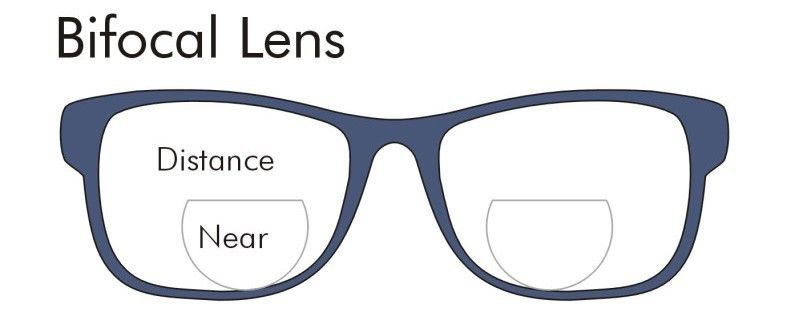
The multifocal lens contains two or more lens powers within the lens for correcting vision at different distances. These include bifocals, trifocals, progressive addition lenses, and special occupational lenses. These are prescribed when someone needs to see clearly at two or more distances
Bifocals
The prescription ground in the lens corrects both near and distant vision.
Depending on your age, the midrange distance between 3ft and 10ft may be blurred.
The lined bifocal offers a larger reading area.
The line is not as visible as before
We can apply a no-glare coating that almost makes the lines invisible
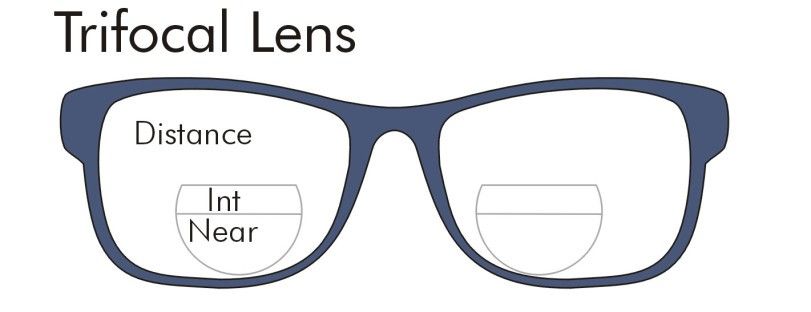
Trifocals
The prescription in the lens corrects for distance, midrange (computer), and reading.
These lenses are used for people needing to see often at 3-6 feet.
Some prefer these for computer use
Will enable you to see merchandise on the grocery store shelves
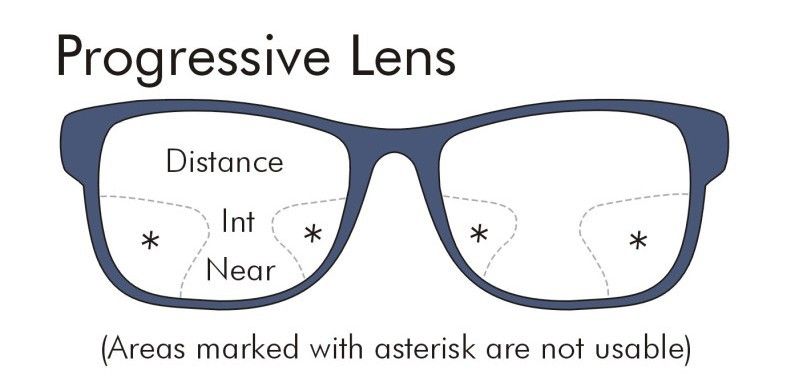
Progressive lenses - also called:
Progressive Bifocals (most common)
Invisible bifocals or trifocals
Lineless bifocals or trifocals
No-line bifocals or trifocals.
Focusing occurs at many different levels: distance, midrange, close, and distances in between.
Power changes gradually as one looks down through the lens.
The reading area is much smaller than lined bifocals.
To work properly, it is imperative that these are measured and fit by a skilled technician.
There are many different "brands," some causing more peripheral distortion than others. We only use the best.
Reading requires moving the head rather than the eyes from side to side.
There is more initial peripheral distortion when reading.
These lenses are not advised for people who suffer from motion sickness (can't read in a moving car).
All bifocals take some getting used to, but we feel these are eventually the most natural.
They are popular because the lineless is cosmetically appealing.
ADJUSTMENT PERIOD
It will probably take you a couple of weeks to a month to adjust to your new lenses.
Here are some suggestions for wearing multifocal lenses:
Don't look at your feet when walking.
Hold the reading material closer to your body and lower your eyes so that you are reading out of the lowest part of your lenses.
Fold your newspaper in half or quarters and move it rather than your head when reading.
Wearing them as much as you can for the first couple of weeks, will speed up the adjustment period.
BIFOCALS FOR PRESBYOPIA
The gradual decrease in the ability of the eye to focus on near objects is a natural part of the aging process called PRESBYOPIA. Multifocals can correct these changes. Currently, multifocal lenses account for more than half of all lenses worn in the US. In some cases, bifocals are prescribed for students that have eyestrain while reading. The top enables them to still see the distance, while the bottom has a prescription to reduce eyestrain while reading. Multifocals cost more than single-vision lenses because two or more prescriptions are ground into one lens, requiring additional time and skill needed to accurately fabricate, measure, and fit these lenses.

SPECIAL LENS TREATMENTS:
Scratch Coating:
Protects lenses from scratches caused by everyday use.
Ultraviolet (UV):
Additional protection from harmful ultraviolet rays of the sun. Polycarbonate and the highest index lenses have built-in UV protection.
Special color tints:
They enhance your vision and your appearance. Any color can be ordered.
Mirror coatings for sunglasses. Blue Blocker and yellow coatings for hunters and daylight driving.

Polarized lenses cut the glare and reflections from the sun.
These are great for fishing and daylight driving.
No-glare or anti-reflective:
No-glare lenses provide superior vision. Normally, only 92% of the light gets to the eye because of reflections. With the anti-reflective coatings, up to 99% percent of the light reaches the eye. Not only is this coating great cosmetically, but it also enables those with cataracts or macular degeneration to see better at night.
Virtually eliminate distracting reflections off your glasses, enhancing the appearance
Make lenses appear thinner
Vastly improves night vision, removing glare from oncoming headlights
Prior scratching, smudging, and cleaning problems have been eliminated with new technology
Caution as many outlets still offer the older technology for lower prices
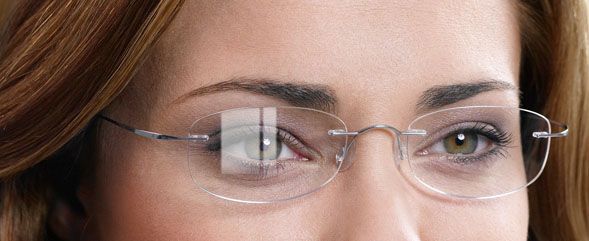

Enhanced eyewear appearance and improved night vision on the right side of both photos due to anti-glare component in lenses
ATHLETIC GLASSES:
Sports goggles provide the ultimate eye protection.
COMPUTER GLASSES:
Not needed for everyone, these glasses are designed to use the top half of the monitor distance and the bottom part for usual reading distances. This removes the need to have to tilt your head back in order to see the monitor through the bifocal. You can still see a fair distance out of the top, not like if you looked out of your reading glasses across the room. Almost a must for those on a computer all day.
OCCUPATIONAL GLASSES
have a bifocal both on the top and bottom. These are used for people who have to do a lot of close work ABOVE their heads, like electricians, telephone workers, plumbers, or car mechanics.
From single vision to invisible multifocals to plain reading to prescription eyewear, we can provide you with special eyewear to fit YOUR lifestyle, all at an affordable price.
That's what we do best at Skowron Eye Care.

© 2024 Skowron Eye Care. All rights Reserved. Accessibility Statement - Privacy Policy - Sitemap
Powered by:
